
When people tell me they don’t need ‘that show dog training’, I explain to them that it’s all the same training, it’s just the application that is different. As my friend Jill Morstad of Prairie K9 in Nebraska often says, “The dog doesn’t know what side of the flimsy ring gate they are on.”
I started out with show dogs who needed a lot of coat care to be competitive. A dog learning to stand on a table was a natural byproduct of stepping into the conformation ring with any dog that required more than a bath and a nail trim.
Sure, there were other things; skin care, whisker trims (which is frowned upon for good reason today) and adequate physical conditioning, but most of the things that people call ‘show dog training’ started with the breeder at about 5 weeks of age.
Being stacked on a grooming table, physically handled, and touched copiously, nail trims, checking bites a million times a day in breeds where the standard requires a scissors or level bite (and bite faults happen regularly), palping for testes in males to make sure they don’t ‘float’ and descend correctly, bathing, brushing, curating that coat shape as it grows in for coated breeds like Poodles and Bichons…
Much of a show dog’s life is spent on a grooming table if it is a hair breed, so the vast majority of their ability to stand still for long periods of time came from endless hours on the table after a bath, getting brushed, blown, clippered and scissored into fault-covering perfection.
Handling is a major part of a show dog’s beginnings. They have to learn how to move on a leash at a speed the handler controls, they have to learn how to stand still long enough for a total stranger to touch them all over their bodies, and they had to be able to accommodate the chaos of travel, noisy show venues, living in and out of a truck, van or camper, and accommodating ever-changing environments that were distinctly not home.
Without even really applying the principles of training as we know it, training dogs for the show ring still involved the principles of learning, in ways that prepared the dog for a larger community where certain behaviors are expected. Be polite, don’t bite, walk through crowds of people and dogs without over-reacting, let strangers molest you, don’t complain.
For as many dogs that attend dog shows, the number of incidents is still pretty low. Incidents at dog shows still pale in comparison to the number of incidents on the streets, or in dog day cares or dog parks.
People want to slag on show dogs and the whole conformation thing for a vareity of reasons, but I still defy anyone to find that many animals in one place at one time with a lower frequency of potentially dangerous outcomes.
I’ll wait.
Nobody is debating if this is an adequate life for a dog. More dogs flourish in that environment than don’t. They are treated like royalty and are more well-traveled than the larger percentage of dogs owned by folks who never let their dogs explore the greater world outside their own living room or back yard. Yes, there are plenty of examples where dogs have been neglected and have died, but again, so have dogs in the care of veterinarians, trainers, boarding kennels, day cares and at dog parks. This isn’t an either- or, it’s about the benefits experienced by show dogs that can benefit every dog, purebred or not, show dog or not.
I was a show dog owner and groomer before I became a trainer. I didn’t realize it at the time, but I was already training, and the things I was teaching dogs and their handlers then, are the same things I teach today, 50 years later.
Yes, Virginia, you actually do need ‘that show dog training’, if you want your dog to be a well-rounded companion that is comfortable in any situation, can be physically handled by people outside of their intimate acquaintences, and has no issues with travel or being in different environments.
Even if your dog doesn’t require a lot of grooming, it still needs it’s nails done frequently enough (the most neglected part of a dog’s anatomy, besides teeth), teeth examined and scaled occasionally, and checked for lumps and bumps. If your dog won’t stand still for your groomer or your vet, you need help.
So, technically, every dog is a show dog, or should at least be treated like one.
If you have recieved complaints about your dog at the vet, groomer, day care provider ort boarding kennel, maybe it’s time you actively sought show dog training. Your dog will thank you, and so will their care providers.
If your dog struggles with self control at the vet or at the groomer, or if you actually do have a show dog candidate and want to get ahead of the competition, we are only an email away.
We offer virtual options with both written and video tutorials to assist with learning new skills for handling in and out of the ring. Schedule a consult to learn more.
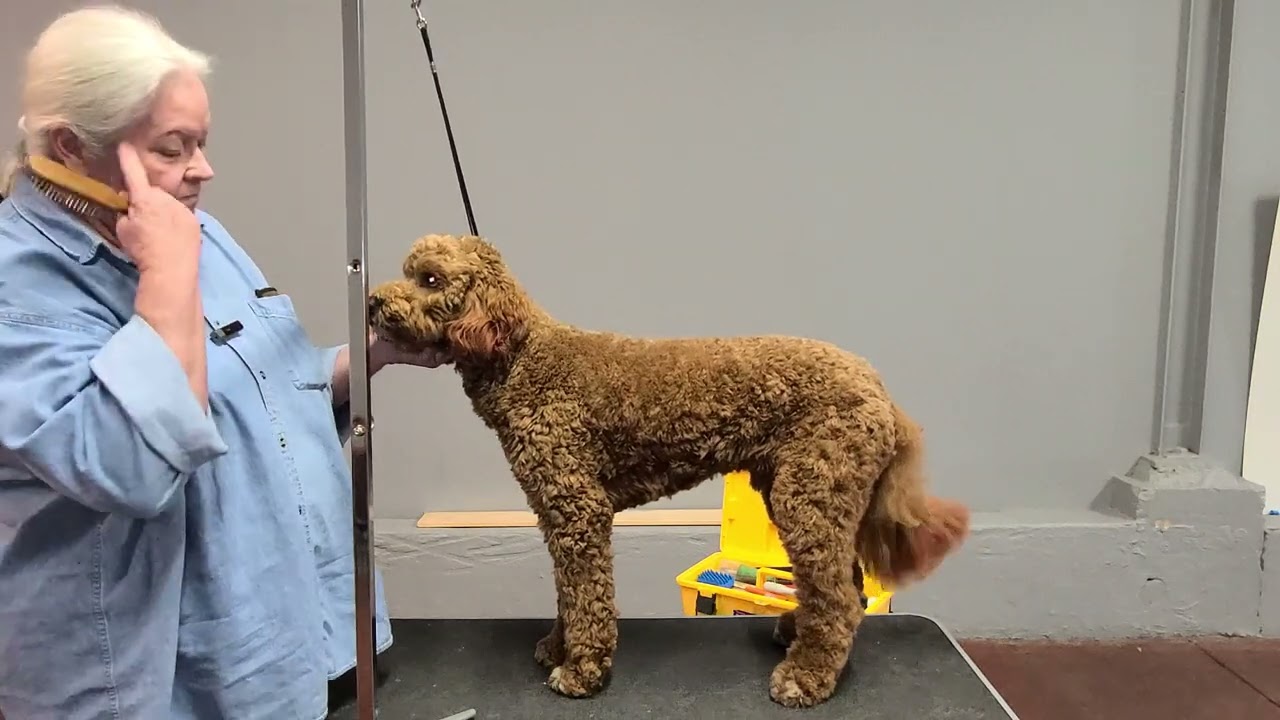
Everybody tells me how they don't need 'that show dog training', but their dogs are the same dogs that struggle with going to the vet without sedation, or going to the groomer without issues. The one thing that show dogs learn is how to tolerate being physically handled and to be still enough for grooming. Every dog can benefit from the same training that all show dogs get.
















I tell people this all the time now: Every dog is a show dog, and each person to whom it is shown will judge it (and YOU, the owner!) much more harshly, and on different qualities, than any judge inside the ring.
We win no ribbons, but the compliments we have received from the public on the skills being applied right in front of them are way better than any sparkly shiny ribbon. This boy may yet land in the Obedience ring, but there’s still a LOT of work ahead.